Dropping the I(ndependent) for the We

Standard

  “You are not giving up your right to vote or to own property if you let me make you a cup of coffee” – Anonymous

A few days ago, my husband and I had a conversation about independence within our marriage. We mutually agreed that we dropped the I(ndependence) for the we(dependence). We like to think that we have coined the term (we)dependent, which has the same definition as the paradoxical term interdependence. Interdependence can be defined as the mutual dependence between things or mutual reliant on each other, such as the relationship between plants and animals. On the other end of the spectrum is being too independent in the relationship or being co-dependent in the relationship.

“All the women who are independent, throw your hands up at me” ecstatically song by Beyonce, Kelly, and Michelle, who are members of Destiny’s Child on the Charlie’s Angels’ soundtrack in the 2000’s. As I reflect back, I can’t even imagine a time when that song played on the radio, and I did not wave my hands in the air and sing along. We live in a world that praises independence. Have you own money, buy your own things, be strong and do not show anyone your weakness is the name of the game. Have we created a culture where we have a hard time adjusting to finding a medium between independence and dependence? Have we become too independent? Training yourself to be extremely independent can be a disservice because when placed in situations where dependence is required, such as a relationship, we will have no idea how to navigate in these foreign waters according to Erica Djossa in her article on The Interdependent Relationship (2012).

On the other end of the spectrum is dependence. Dependence is the core component in building a secure and lasting relationship, yet we cringe at the thought of being dependent in a relationship. A healthy level of dependency allows us to depend on another person for support. Ideally, we are able to trust other people enough to open up and feel vulnerable yet remain self-confident enough to survive conflict and rejection. In intimate relationships, healthy dependency allows us to blend closeness, passion, and commitment. When this occurs, we experience a sustaining intimacy that doesn’t threaten our sense of self. Within a healthy level of dependence, we also know that asking for help doesn’t mean we’re helpless. We are aware that it can be an empowering opportunity to grow and learn and become stronger.

An unhealthy level of dependence is label as, Codependent. Codependence is an excessive emotional or psychological reliance on a partner, you lose yourself in another person, not knowing where you end, and they begin. This type of relationship can cause problems because you start to look at the other person to complete you. Understanding your worth as an individual rather than depending on your partner would be ideal and healthy in the relationship. Darlene Lancer, LMFT described Codependent couples as out of balance and often struggle for power and control. The codependent couple displays an imbalance of power, possibly where one partner may have taken on responsibility for the other. They are often anxious, resentful, guilty and responsible for their partner’s feelings and moods. People who are involved in a co-dependent relationship try to control each another to feel okay and get their needs met rather than respect for each other’s separateness and individuality. The partners in these type of relationships often can’t tolerate disagreement and blame one another for causing their problems without taking responsibility for themselves.

We can see that being on one extreme or the other is not going to work best. Try to visualize a scale with dependence with one side of extreme independence and co-dependence on the other end. Ideally, we want to move away from the other edges towards the middle to create interdependence. Check these five quick ways to develop and maintain balance in your relationship.

1) Work on improving yourself
2) Maintaining an individual identity
3) Compromise
4) Established Boundaries
5) Use of Effective Communication

The goal is to create balance in your relationship.

By Shayla Peterson, LCSW
Unplug & Get Connected: The Power of Self Care

Standard

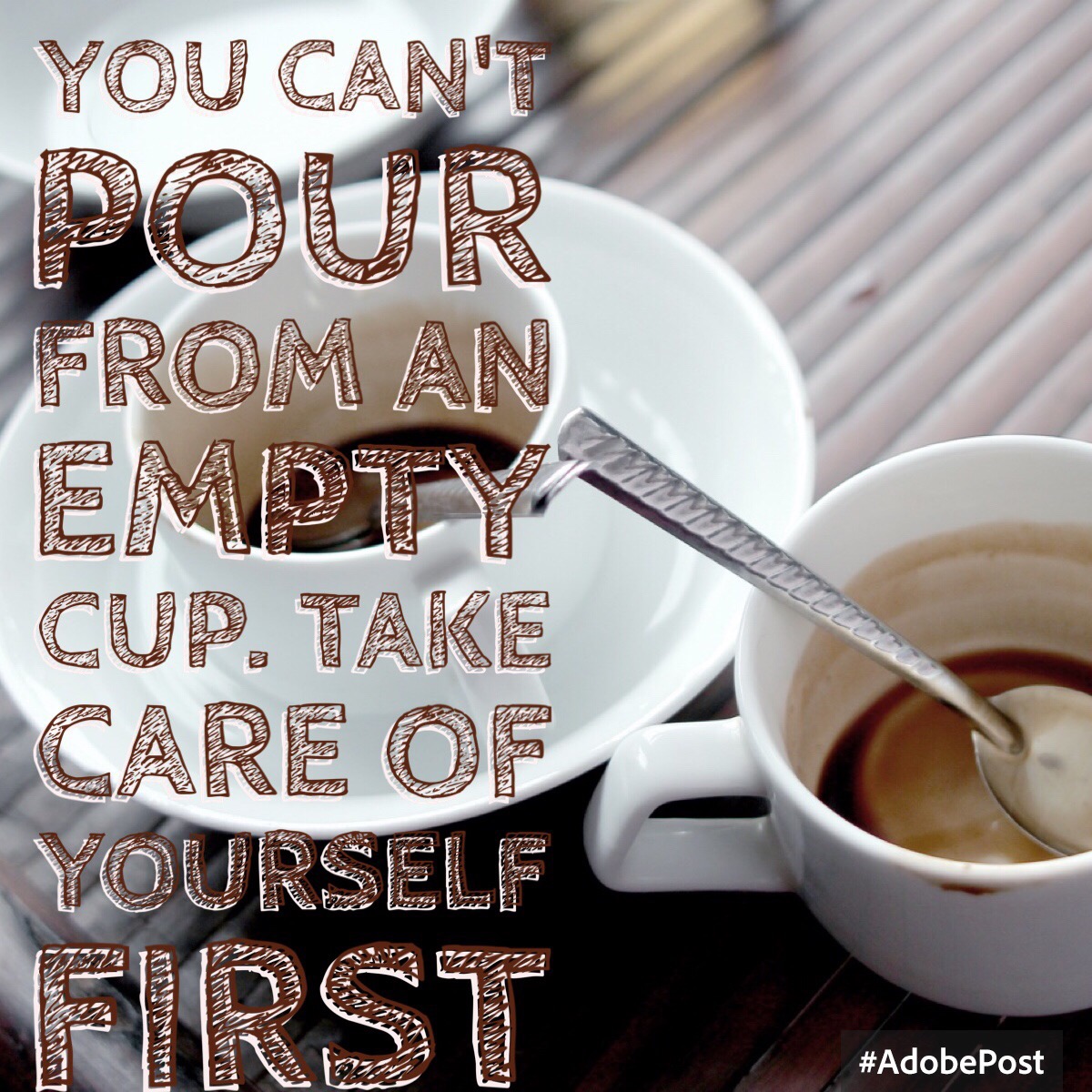
  “You can’t pour from an empty cup. Take care of yourself first.” 

All too often we neglect our own self-care. We often use the phrase such as “we have to take care of others, and then I will take care of me.” We carry around the belief that self-care is selfish. When in fact, we require TLC (Tender, Love & Care). When we do not take adequate care of our physical, mental or emotional health, we started to feel depleted, drained or frazzled. For some reason, participating in self-care is considered a luxury due to increasing workloads, school and family obligations.   In reality, self-care is an investment we cannot live without. The goal is to create a balance between selfishness and sacrifice. There are three (3) components to identifying self-care are a) Physical, b) mental/emotional and c) spiritual. The physical involves moving our bodies; the mental/emotional requires us to accept and forgive ourselves, and the spiritual allows us to practice exercising our mind and soul. Have you participated any of the three components of self-care?

Here’s a list of 30 self-care activities that you can participate in today. Over the next 30 days, I challenge you to participate in all 30 or jump around to the activities that you like the most or develop your own ideas.   Compare how you felt before with how you feel after.

(1) Eat a fruit or vegetable

(2) Get between 6 – 8 hours of sleep per night

(3) Ride a bike

(4) Call a friend or meet for lunch

(5) Try a new activity

(6) Read a Chapter from a book

(7) Get a massage

(8) Listen to music

(9) Stare up at the sky

(10) Take action on something you have been avoiding

(11) Take a lunch break

(12) Plant a flower

(13) Write in a journal

(14) Volunteer

(15) Laugh when you can

(16) Read poetry or inspiring quotes

(17) List five things you are grateful for

(18) Get a manicure or pedicure

(19) Pray

(20) Meditate

(21) Spend time away from your cell phone

(22) Eat a piece of Chocolate

(23) Stretching

(24) Dance

(25) Go for a walk

(26) Take hot shower or bath

(27) Pay attention to your breathing

(28) Snuggle under a cozy blanket

(29) Cuddle with a pet

(30) Become a tourist in your own city


By Shayla Peterson, LCSW

References:

Eight plus self-care ideas by Barbara Markaway, PhD at www.theselfcompassionproject.com ( June 2013)

Seven Types of Self-Care Activities for Coping with Stress by Barbara Markaway, PhD and Greg Markaway, PhD on Psychology Today (March 2014)

Top 10 Self-care strategies by Laura Schenck, MA on Mindfulness Muse (May 2011)


Use Procrastination to your Advantage

Standard

procrastination2Everyone can point out the cons in procrastinating, but what about the pros? Are there any pros in procrastinating? Is there a successful way to procrastinate? I know we can all relate on some level where our procrastination has gone wrong resulting in receiving a failing grade, getting late fees tagged on to your bill or not making a deadline at work causing disruption in productivity. This article will discuss two types procrastination, unsuccessful and successful aspect of it.

One of the disadvantages of procrastination is that it is known as the thief of time. When we engage in temporary distractions to avoid a task(s), we often set ourselves up for increased stress and raised anxiety levels. Also, having less time to complete the task properly or to your best ability. You may even risk not completing the work at all. Let’s explore some reasons why people procrastinate:

1.Fear of failure. People avoid starting projects due to fear of the completed project. Your need to finish the project is overpowered by your concern of what others may think, disappointing others or believing you are incapable. Work toward combating your fear by visualizing yourself completing the project and being satisfied with its outcome.

2.Avoidance. Avoidance is a maladaptive coping mechanism that often shows up in the form of procrastination. If there’s a not so positive memory associated with a location or experience, avoiding completing that task in connection with the prior experience will likely surface. Avoidance serves to protect from psychological harm. An example includes avoiding interacting with a co-worker who you do not necessarily get along with although you both assigned to complete a project together that is due at the end of the week.

3. Lack of motivation. We may say, “I’m just not motivated” or “it is hard to get started.” Over the years, I have learned motivation kicks in once you start. In college, I lack the motivation to write papers. I would commit one hour in the library to grab journal articles, which create a spark to reading the research, thus motivating me to write a research paper on my findings.

4.Rewarding. The act of procrastinating can provide smaller rewards than larger rewards. We may delay completing a chore at home, only to know that our partner will complete the task later that week. Another example can include procrastinating meeting with your boss to avoid a serious conversation.

After exploring the time snatchers above, let see how to procrastinate successfully. People who successfully participate in procrastination are known to do four key things:

1) Embrace it. Some people perform better under pressure. They concentration better when the pressure is on. Those with ADHD are often successful in procrastination. However, there is often guilt due to not starting the project earlier even when there is a history of completing projects on time. It is suggested that you embrace your planned procrastination to produce your best work.

2) Be honest. When you are planning your procrastination, be honest about when you will start. Explore your past experiences of how effective you were with the minimal amount of time and adjust accordingly.

3) Schedule it. Yes, schedule your planned procrastination. Circle the date on your calendar and set an alarm on your smartphone. For successful procrastination to work, there has to be an opportunity of when you will complete the task.

4) Do it. Just do it!

To further explore the impact of how procrastination affects your life answer these questions: Think about a time you avoided a task and remembered your reasons for avoiding that task. What problems did this create for you? How did you feel? Now, think about a time you decided not to procrastinate. Why did you choose not to avoid this task? Described the positive things that happened because you completed this task. How did you feel? Which questions gave you a better feeling about yourself? What changes do you see yourself making? Use the tools in this article to help you avoid getting robbed from the best usage of your time, energy, and abilities whether you choose to reframe from procrastination or practice successful procrastination.

Reference:
Abel, J.L. (2014). Resistant, anxiety, worry and panic: 86 practical treatment strategies for clinicians. pp 147-154

Shayla Peterson, LCSW

Improve your Relationships, Improve your Mood

Standard

We all need people and having positive relationships in your life will help improve your mood. I can name at least four go to friends that can help boost my mood when I feel down. It’s important to maintain a balance in the relationship which means the relationship is meeting your needs as well as the needs of the other person. Therefore, when my friends need me, I am there for them as well. However on the flipside, unhealthy relationship exist, and if we want to live a healthier life, we may want to consider ending them. I’m sure we can all think of a relationship in 2015 with a friend or family member that has caused us pain or produced negativity. You may want to consider ending those relationships in 2016. Check out these seven tips on improving your relationships for experiencing a healthier new year.

Connection. Remember that one primary goal most of us have in life is to have other people care about us; needing other people in our life is a part of what makes us human.

Communication. We all have different communication styles from somewhere, so try not to judge yourself as aggressive, passive or passive-aggressive person. Accept it and work on making some healthy changes in the way you interact with others.

Maintenance. While it’s important to work out the big problems in your relationship when they arise, it’s, even more, important to take good care of your relationship on an ongoing basis to prevent the relationship from ending.

Mindfulness. Being mindful when communicating with others will benefit your relationship. People notice when you are present and actively engaged in your interaction with them.

Self-care. Work towards having balance in your relationship so that sometimes you’re putting your needs first. This is not selfish, it self-care and it will benefit the relationship.

Positivity. The relationship we have in our lives influences how we feel, so it is important to work towards having positive, healthy people around us on a regular basis.

Girl bye (also referred to as Goodbye). Not all relationships are salvageable. Take an inventory of the relationships you have in your life and think about how healthy they are. If you find yourself talking about this person when they are not around, you dread spending time with them and it’s hard to set boundaries with them; it may be time to end that unhealthy relationship. Acknowledge that your attempts at making the relationship more positive are unsuccessful.

As you take inventory of these 8 simple steps towards improving your relationships with others, observe what deficits that are neglect your friendship(s).  Make an effort to reach out to a dear friend this week to say, “HELLO.”  I’m sure reaching out them will bring a smile to their face and a smile to yours as you two shoot the breeze.  Do not underestimate the power of social contact with others and its effect on your over mental health.

Reference:

Van Dijk, S. (2012) Calming the Emotional Storm: using dialectical behavioral therapy skills to manage your emotions and balance in life p155-167

Morin, Amy (posted October 15, 2015) 9 Signs it’s time to get a toxic person out of your life

Shayla Peterson, LCSW

Got Self-Esteem?

Standard

Unknown-1It is not what happens to me but how I handle it that determines my well-being. A new year presents itself with new opportunities to create the best you. I have learned that having positive self-esteem is an active process, and it is your daily efforts that will make a difference in your life experiences. It can be hard to define what self-esteem means to you, but implementing these techniques assist with your walk with confidence. First, let’s explore these questions to get you thinking about your self-esteem and self-worth.

  1. Describe a time in your life where your self-esteem was high? What did that feel?
  2. Describe a time in your life when your self-esteem was low? What factors contributed to those feelings?
  3. Identify someone who had contributed to building your self-esteem?
  4. Do you compare yourself to others? How did comparing affect your self-esteem?
  5. What do your say to yourself that helps you remember how awesome you are?

Below are a few of my favorite ways to boost confidence levels:

  • Be a Goal Getter. “Shoot for the moon, even if you miss, you will land amongst the stars.” – Les Brown. Learn to be satisfied with your best work. Avoid comparing yourself to others which often leads to dissatisfaction, frustration and in most cases anger.
  • Focus on your accomplishments. “Be stubborn about your goals and flexible about your methods.” Each day give yourself a smile for the hard work that you have done and progress towards goals.
  • Use positive mental imagery. Picture yourself having a successful day.
    Look on the inside not outside. Identify yourself by a sense of purpose versus identification by things you have. Your purpose will outlast material items.
  • Be Positive. Acknowledge that how you think affects how you feel. If you continue to feel negative, swap out those thoughts with realistic positive thoughts. Find something positive about each day.
  • Have an Attitude of Gratitude. Practice being grateful for what your have. Fill your cup with kindness, love, understanding, hope, peace and gratitude.
  • Develop a Self-care plan. Be kind to yourself. Believing that, you are worthy of taking of yourself. Take care of your health: Mental, Physical, Emotional, and Spiritual.
  • Time to Turndown. Set aside time to relax and let go of stress. Utilize positive affirmation such as, “I am optimistic about life, I look forward to and enjoy new challenges.”
  • Give it up, turn it loose. People-pleasing, negative self-talk, self-doubt, criticizing yourself and others, fear of failure and complaining.
  • Seek Supports. Reach out to others who you share a common interest with, call an old friend back home, check on an elderly relative, join a local group or volunteer.
  • Put on your favorite Heels. Hold your head up high and walk with confidence.  “The higher the better. It more about an attitude. High heels empower women in a way.” – Christian Louboutin 

Shayla Peterson, LCSW